

Hybrid Work: The Advantages and Challenges
Future of Work Technology breakthroughs and changing workplace dynamics have led to a considerable transformation in the traditional idea of labor in recent years. This concept, which combines the advantages of both in-person office work and remote flexibility, has completely changed how businesses and people approach the workplace. We will discuss the idea of hybrid […]
Future of Work
Technology breakthroughs and changing workplace dynamics have led to a considerable transformation in the traditional idea of labor in recent years. This concept, which combines the advantages of both in-person office work and remote flexibility, has completely changed how businesses and people approach the workplace. We will discuss the idea of hybrid and remote working arrangements, as well as their benefits, drawbacks, and implications for the nature of work in the future.
Key Takeaways
- Hybrid work combines in-person office work with remote flexibility, while fully remote means no central office at all.
- Key advantages include better work-life balance, increased productivity, and significant cost savings — up to $10,000 per employee per year.
- Challenges include communication gaps, maintaining company culture, and ensuring fairness between remote and in-office workers.
- The future of work is trending toward hybrid environments where employees choose the work setting that best suits their needs.
Hybrid vs. Remote: The Difference

To differentiate: In a fully remote organization, team members have the freedom to work from anywhere, without a central office. In a hybrid company, employees divide their time between a physical workspace and remote work, while having the option to work from home.
| Factor | Fully Remote | Hybrid |
|---|---|---|
| Central Office | No central office | Physical workspace available |
| Location Freedom | Work from anywhere | Split between office and remote |
| Work from Home | Always an option | Available as part of the arrangement |
| In-Person Collaboration | Virtual only | Available on office days |
The Advantages of Hybrid Work
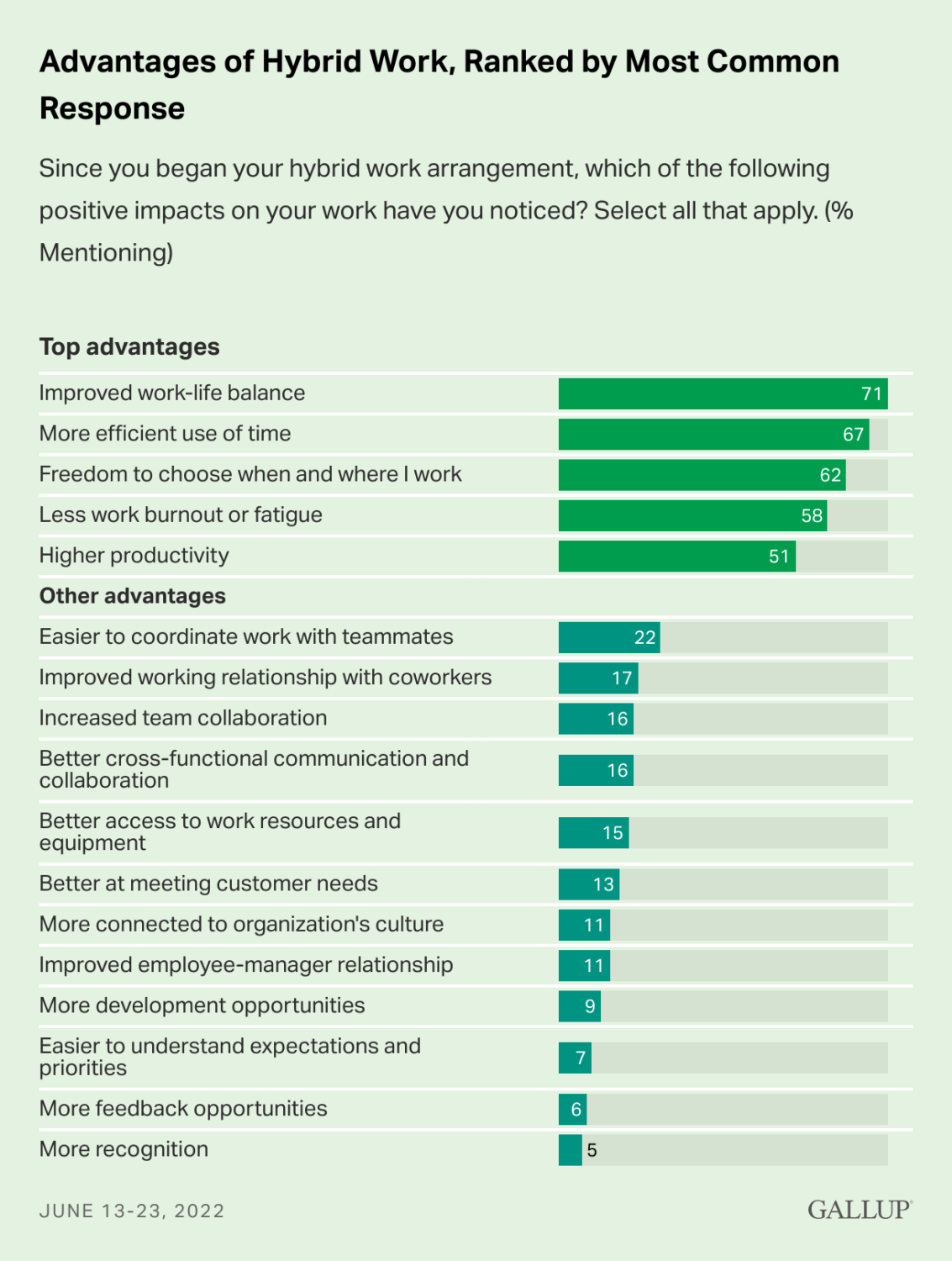
Flexible behavior that improves work-life balance
One of the main benefits of hybrid and remote working models is the flexibility they provide. Employees are no longer bound by a rigid 9am to 5pm work schedule and are free to structure their working hours around their personal lives. This newfound flexibility allows individuals to find a better work-life balance, and according to research, it results in greater job satisfaction and lower stress levels. Commuting becomes a thing of the past and employees regain valuable time for pursuing personal well-being, family or other interests.
Unlock your productivity potential
Research consistently shows that remote work can significantly improve productivity. Eliminating common distractions and interruptions in the office helps employees focus and complete tasks more efficiently. Hybrid and remote work models allow individuals to work during their most productive hours, such as the early morning and late evening, while providing an environment that suits their work preferences. The result is often better focus, more creativity, and better performance.
The financial benefits of hybrid work
Both employers and employees benefit financially from hybrid and remote work models. Employees can benefit from significant cost savings by avoiding commuting-related costs such as transportation costs. Meanwhile, businesses can significantly reduce overhead costs, including office space, utility bills, and other operating costs. According to a survey by Global Workplace Analytics, businesses can save an average of $10,000 per year for each remote employee who works half of the time from home.
Hybrid Work Analysis
Advantages
- Improved work-life balance and flexible scheduling
- Increased productivity and focus
- Cost savings up to $10,000 per employee per year
Challenges
- Communication gaps between remote and in-office teams
- Risk to company culture from geographic distance
- Potential fairness and inclusion issues
The Challenges of Hybrid Work
While hybrid and remote work models offer many benefits, they also present challenges that organizations face. Below are the challenges and simple steps to avoid them.
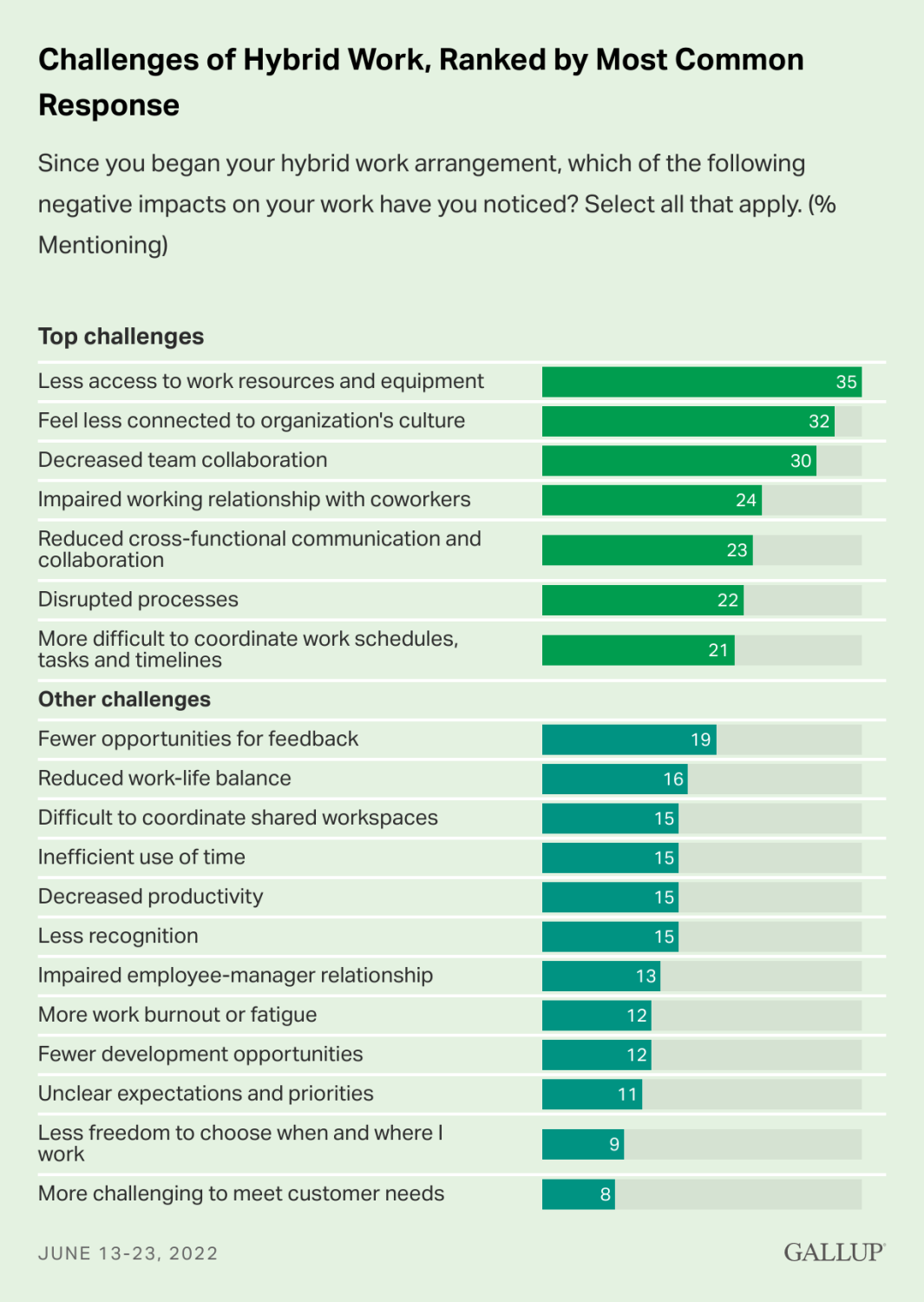
Hybrid work communication gap
Ensuring effective communication and collaboration between team members in a hybrid environment requires the adoption of appropriate digital tools and fostering the remote work culture of open and transparent communication. Regular virtual meetings, project management platforms, and other collaboration tools help bridge the gap and induce teamwork.
Maintaining company culture
Geographic distance can pose a risk to corporate culture. To meet this challenge, organizations must actively foster a sense of belonging and connection among their employees. Fostering virtual social activities, team building exercises, and shared experiences help maintain a strong organizational culture and foster a sense of belonging.
Fairness and Inclusion
Remote work can create an inadvertent divide between employees who have more face-to-face interactions and those who work primarily remotely. Organizations should strive to create an inclusive environment where remote workers have equal access to resources, growth opportunities, and participate in decision-making processes.
| Challenge | Solution |
|---|---|
| Communication Gaps | Adopt digital collaboration tools, hold regular virtual meetings, and foster open communication culture |
| Maintaining Company Culture | Virtual social activities, team building exercises, and shared experiences to foster belonging |
| Fairness and Inclusion | Ensure equal access to resources, growth opportunities, and decision-making for all employees |
The Future of Work
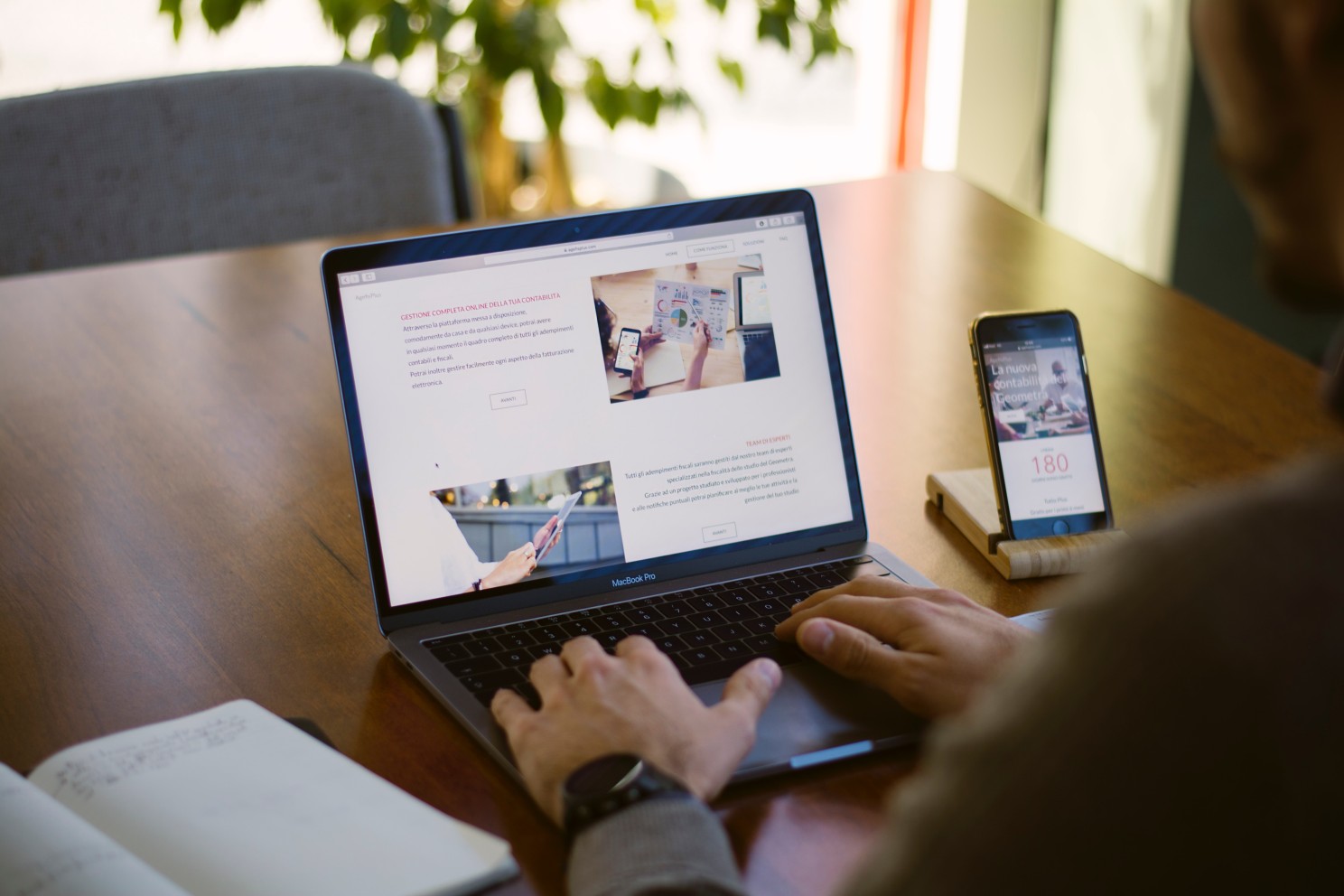
The rise of hybrid and remote working models ushered a new era of work. As organizations leverage these models and address the challenges they pose, the future of work may become a hybrid environment where employees are free to choose the work environment that best suits their needs and preferences. Traditional office environments are evolving into flexible workspaces that foster collaboration and innovation, making remote work a viable option for a wide variety of occupations.
Frequently Asked Questions
What is the difference between hybrid work and fully remote work?
In a fully remote organization, team members have the freedom to work from anywhere, without a central office. In a hybrid company, employees divide their time between a physical workspace and remote work, while having the option to work from home.
What are the advantages of hybrid work?
The key advantages of hybrid work include improved work-life balance through flexible scheduling, increased productivity by eliminating office distractions and allowing people to work during their most productive hours, and significant financial benefits for both employers and employees through reduced commuting and overhead costs.
How much can businesses save with hybrid work?
According to a survey by Global Workplace Analytics, businesses can save an average of $10,000 per year for each remote employee who works half of the time from home. Employees also benefit from significant cost savings by avoiding commuting-related transportation costs.
What are the main challenges of hybrid work?
The main challenges include communication gaps between remote and in-office team members, maintaining company culture across geographic distances, and ensuring fairness and inclusion so remote workers have equal access to resources, growth opportunities, and decision-making processes.
How can organizations overcome hybrid work challenges?
Organizations can overcome hybrid work challenges by adopting appropriate digital tools for communication and collaboration, fostering virtual social activities and team building exercises to maintain culture, and striving to create an inclusive environment where remote workers have equal access to resources and participate in decision-making processes.
